Sexual assaults under reported on college campuses
MONTGOMERY, AL (WSFA) - One out of four college students will be the victim of a sexual assault during their academic career. It's a statistic that's under the microscope as Congress pushes legislation to force college campuses not only to report sexual violence but offer immediate help to the victim.
Mandatory federal reporting standards still aren't getting the job done. Many of these heinous acts go under reported by the victim and sometimes by the universities.
National data suggests 25 percent of college students are victims of sexual violence, but blind tests reveal it's much higher.
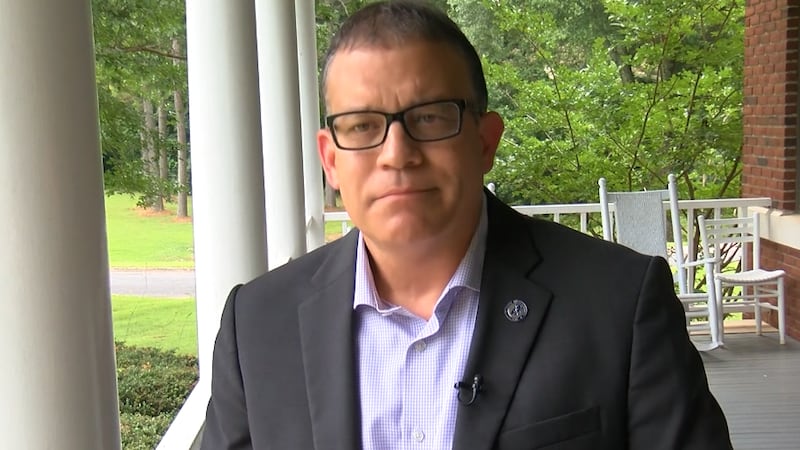
Eric Smith, Director of Auburn University's Office of Health Promotion and Wellness Services, meets with students across campus and hands out anonymous clickers to gauge the exposure to sexual assault.
"We ask 'do you know or has something happened to you that may be a sexual assault, may be domestic violence, do you have a friend who's been stalked or harassed,'" Smith said. "Pretty much all those groups are reporting back the same numbers. It's about 60 percent or maybe two thirds -- that's a lot of people."
Colleges and universities are required to publish this data in an annual report mandated by the Clery Act, a consumer protection law requiring campuses to report all violent crimes. The Clery Act requires campuses to report emergency data, notify students and provide expedient support to victims, but it certainly has its challenges. Colleges are left to combine their own statistics, some with no audit trail to substantiate the crime reports.
"I'm sure there are things happening on this campus that I am not aware of," said Nesha Smith, with the University of Alabama Women and Gender Resource Center. "I want people to feel safe to report, but I want people to know that's a very deeply personal decision."
Smith coordinates counseling and support for victims at the University of Alabama. Clery data released last month shows 14 rapes were reported in 2014.
As for how the data is reported, it's still up to the victim and, in many cases, the university.
"There's always reporting to police. They can report through the school's Office of Student Conduct", Nesha Smith said. "They can report to Title IX. They can report anonymously and not have an investigation and just report. They can request to file charges and they cannot report at all."
While the Clery Act is standard, every college campus that receives federal dollars must have a Title IX office to investigate sex crimes and discrimination. While students can report sexual assaults to college counselors and advocates, that information isn't required to be reported to Title IX or annual violent crime reports.
"I know these are issues that don't get talked about that frequently and talked about as much as they happen," Eric Smith said. "We are thankful the phone rings because so often unreported and unsupported."
Auburn University took a no holds barred approach to sexual assault years ago, sending out text alerts when a sexual assault had been reported. A daily campus crime log is also available to the public on the website. This year, the campus introduced the Green Dot Program, targeting bystanders -- those who witness the warning signs of sexual assault.
"For so long, our messages have been directed towards perpetrators and people who suffer at the hands of those perpetrators," Eric Smith said. "We
know they make up a really small number of the total population. For the largest population, at least 80 percent of the people want to do the right thing. We are hoping to engage that population and teach the majority to take a stand on an issue and say violence is not ok."
The goal of the Green Dot program is to stop an act of sexual violence before it starts, teaching students intervention methods. Bystander training started on campus with large, influential groups months before the program was rolled out. Auburn's Clery data reported five rapes in 2014. Smith wants to reduce those numbers by half.
"We walk people through an exercise, and we have them close their eyes and imagine their favorite person," Eric Smith explained. "What about that person makes them the most loved and cherished member of their life, and we ask them to think, what would you think if someone was hurting that person. And how would it make you feel if someone was standing there watching it happen. That's the person we want to engage, the bystander."
Campus Safety Reports: 2014 data
Alabama State University
Sex offenses -- Rape: 2, Fondling: 0
Auburn University
Sex Offenses -- Rape and fondling: 5
Troy University
Sex Offenses -- Forcible: 0
University of Alabama
Sex Offenses – Rape: 14, Fondling: 3
Copyright 2015 WSFA 12 News. All rights reserved.